
Why? Because a low-cost power supply can lead to higher failure rates, increased energy consumption, and expensive maintenance, ultimately costing far more over the product lifecycle.
What Is TCO in Power Supply Selection?
Total Cost of Ownership includes all costs associated with a component throughout its lifecycle:
- Initial purchase cost
- Energy consumption over time
- Cooling and thermal management costs
- Maintenance and replacement costs
- System downtime risk
? In power systems, the AC-DC converter directly impacts every one of these factors.
Hidden Costs of Low-Quality AC-DC Converters
1. Energy Loss = Continuous Financial Drain
Lower efficiency means more power wasted as heat.
Example:
- 85% efficiency vs 92% efficiency
- In 24/7 industrial systems, this gap can result in significant annual electricity cost differences
? Over time, energy waste can exceed the product’s purchase cost.
2. Thermal Stress Reduces System Lifespan
Poor efficiency leads to higher internal temperatures:
- Faster component aging
- Increased failure rates
- Additional cooling requirements
? This not only affects the power module—but the entire system reliability.
3. Maintenance and Replacement Costs
Low-end power modules often result in:
- Frequent replacements
- Increased labor costs
- Unexpected downtime
For industrial users, downtime can cost thousands of dollars per hour.
4. Compliance and Certification Risks
Non-compliant AC-DC converters can lead to:
- Failed safety certifications (UL, CE)
- Delayed product launches
- Additional redesign costs
? This is a major hidden risk for OEM manufacturers.
2026 Procurement Strategy: Shift from Price to Value
Modern sourcing teams are adopting a new evaluation model:
✔ Instead of:
- “Which supplier is cheapest?”
✔ Ask:
- “Which solution minimizes total lifecycle cost?”
This shift is especially visible in:
- Industrial automation
- Telecom infrastructure
- Smart energy systems
Key Features That Reduce TCO
1. High Efficiency (>90%)
- Lower energy consumption
- Reduced heat generation
- Lower cooling requirements
? Direct long-term cost savings
2. Reliable Thermal Design
- Stable performance under full load
- Longer service life
- Lower failure rate
? Reduces maintenance and replacement frequency
3. Compact & Integrated Design
- Saves PCB space
- Reduces enclosure size
- Simplifies system design
? Lowers overall system cost—not just component cost
4. Built-in Protection Functions
- Over-voltage protection
- Over-current protection
- Short-circuit protection
? Prevents costly system damage
Real Application Impact: Industrial Systems
In industrial environments (PLC, control cabinets, automation lines):
- Systems run 24/7 continuously
- Downtime is extremely costly
- Reliability is more important than initial price
A high-quality AC-DC converter can:
✔ Extend system lifespan
✔ Reduce maintenance frequency
✔ Improve operational stability
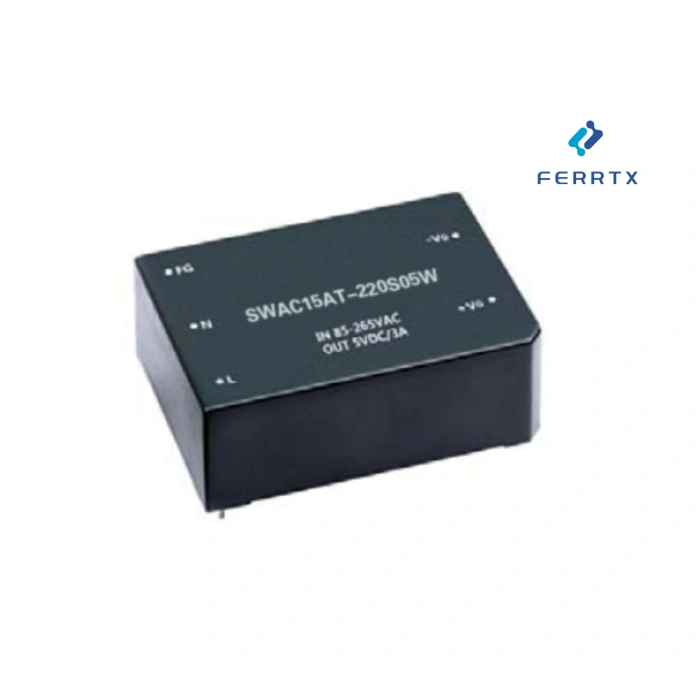
FERRTX AC-DC Converter: Optimized for Cost Efficiency
Ferrtx AC-DC converters are designed not only for performance—but for long-term cost savings:
- High efficiency design → reduces electricity costs
- Stable output performance → minimizes failure risk
- Compact structure → lowers system integration cost
- Reliable protection features → protects entire system
? This makes them a strong choice for buyers focused on ROI, not just upfront price.
TCO Comparison: A Simple Perspective
| Factor | Low-Cost Converter | High-Quality Converter |
|---|---|---|
| Initial Price | Low | Medium |
| Energy Consumption | High | Low |
| Heat Generation | High | Low |
| Failure Rate | Higher | Lower |
| Maintenance Cost | High | Low |
| Total Cost (3–5 years) | ❌ Higher | ✅ Lower |
Conclusion: Smart Buyers Think Beyond Price
In 2026, the most successful procurement strategies are clear:
Don’t buy the cheapest AC-DC converter—buy the one that costs the least over time.
For engineers and sourcing managers, the decision is no longer about saving dollars today, but about:
✔ Reducing long-term operational cost
✔ Improving system reliability
✔ Avoiding hidden risks
