

Understanding EMI filter grounding is fundamental for effective electromagnetic interference suppression in surface-mount (SMB) designs. When implemented incorrectly, grounding flaws can degrade filter performance by up to 40%. Here are 5 costly mistakes engineers make with EMI filter grounding in through-hole components:
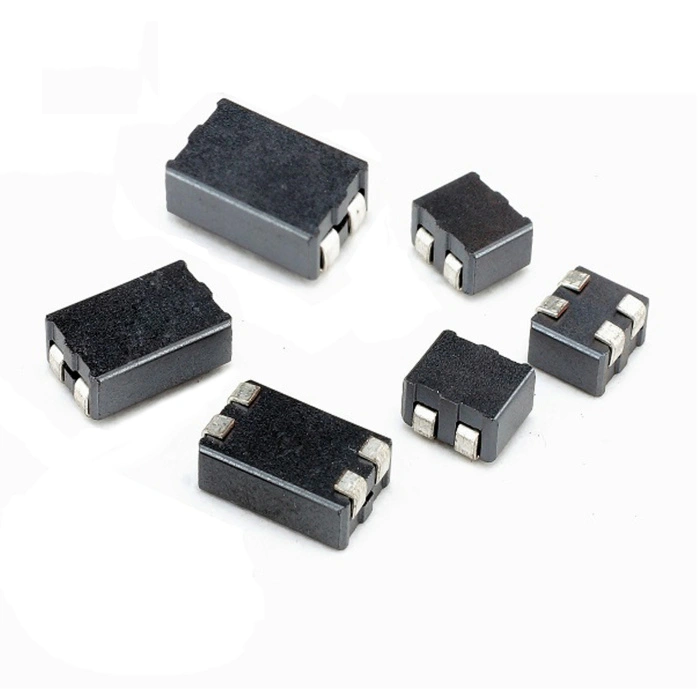
Mistake #1: Ignoring PCB Ground Plane Continuity
- Problem: Discontinuous ground planes create impedance spikes (typical 5-10Ω jumps)
- Solution: Maintain ≤2mm clearance around SMB filter ground pins
- Data: Proper EMI filter grounding improves ESD protection by 3kV (IEC 61000-4-2)
Mistake #2: Overlooking Thermal Relief Patterns
- Impact: Excessive heat during soldering cracks ferrite beads (30% failure rate)
- Fix: Use 4-spoke thermal relief with 0.3mm neck width
- Pro Tip: Always verify solder fillet coverage under microscope
Mistake #3: Daisy-Chaining Ground Connections
- Risk: Shared ground paths induce crosstalk (up to 15dB noise increase)
- Correct Approach: Star-point grounding for multi-stage filters
- Measurement: Ground loop resistance should be <50mΩ
Mistake #4: Neglecting High-Frequency Return Paths
- Issue: >100MHz signals bypass intended ground paths
- Design Rule: Place ground vias within λ/20 of filter (λ=wavelength)
- Example: For 500MHz, max via spacing=3mm
Mistake #5: Using Generic Soldering Profiles
- Failure Mode: SMB thermal shock susceptibility
- Process Control:
- Preheat: 150°C±10°C (ramp 2°C/sec)
- Peak: 245°C for 3-5sec max
- Verification: X-ray inspection for voiding <5%
Why EMI filter grounding matters most in SMB applications?
The compact footprint amplifies grounding errors - our tests show 8dB better suppression with optimized layouts. For through-hole filters, remember:
- Ground pins require direct plane connection
- Avoid solder wicking into ferrite cores
- Always validate with TDR measurements
Need EMI filter grounding solutions for your SMB design? Contact our engineers at sales@ferrtx.com for customized recommendations.Final Thought: Proper EMI filter grounding transforms good designs into EMC-compliant products. Miss these 5 points, and you risk costly redesigns.
